

Disorders
- Anorexia Nervosa
- Binge Eating Disorder
- Bitot's Spots
- Bulimia Nervosa
- Macrocytic Anemia
- Megaloblastic Anemia
- Night Blindness
- Peptic Ulcer
- Prophylaxis
- Rhodopsin
- Rickets Disease
- Scurvy Disease
- Wilson’s Disease
- Xerophthalmia
- Hemochromatosis
- Siderosis
- Thalassemia
- Sideroblastic Anemia
- Porphyria Cutanea Tarda
- Sickle Cell Anemia
- Kwashiorkor
- Menkes Disease
- Neutropenia
- Keratomalacia
- Beriberi
- Pellagra
- Macrocytic
- Megaloblastic
- Pernicious Anemia
- Scurvy
- Rickets
- Osteomalacia
- Abetalipoproteinemia
- Muscular Dystrophy
- Haemolytic Anaemia
- Cholestatic Constipation
- Pretibial Myxedema
- Cretinism Diesease
- Hypothyroidism
- Hypothyroidism
- Feline Hyperthyroidism
- Graves Disease
- Plummer’s Disease
- Thyrotoxicosis
- Acrodermatitis Enteropathica
- Congenital Hypothyroidism
- Hashimoto’s Thyroiditis
- Hyperthyroidism
- Keshan Disease
- Lose Weight with Hypothyroidism
- Metal Fume Fever
- Postpartum Thyroiditis
- Thyroid Storm
- Subclinical Hypothyroidism
Megaloblastic Anemia
Megaloblastic Anemia is a condition also known as Pernicious Anemia occurring when the body does not absorb enough vitamin B12 from the digestive tract, resulting in an inadequate amount of red blood cells being produced. This rare disorder is common among several forms of Megaloblastic anemias, a heterogeneous group of disorders that share common morphological characteristics, and it is more common in individuals of northern European descent.
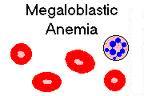
The etiology of megaloblastic anemia’s are diverse, but sharing a common basis of impaired DNA synthesis, mostly all as result of folate and cobalamin deficiency (vitamin B-12), failure of absorption of cobalamin in the terminal ileum, and the effects of medications that develops Megaloblastic Anemia.
Folate deficiency is usually the consequence of folate-poor diets but it may also occur during pregnancy, in individuals with tropical sprue, or in patients on anti-folate or other medications. Supply a routine of folate replacement during pregnancy and folate-containing multivitamin supplementation for elderly persons will reduce the risk to develop folate deficiency.
Because its etiology is diverse, determining the estimate frequency of Megaloblastic Anemia is difficult, but this form of anemia results from a lack of the intrinsic factor in gastric secretions, the substance needed to absorb vitamin B12 from the gastrointestinal tract, resulting in deficiency of this vitamin. Such inability to make intrinsic factor may be the cause by a chronic gastritis, or the resulting of a gastrectomy, that is the removal of all or part of the stomach.
Megaloblastic Anemia may also be associated with thyroid disease, type 1 diabetes, and the personal or family clinical history of the disease. Also dietary and pregnancy-related folate deficiencies are common causes of major megaloblastic anemia’s that may be correctable with folate supplementation during pregnancy and vitamin supplementation for elderly people.
However, mal-absorption due to the failure of the release of cobalamin from foods has recently been recognized as another cause that leads to Megaloblastic Anemia, but it is most likely under-estimated despite this condition may be responsible for borderline megaloblastosis and neurological impairment.
The symptoms and signs of Megaloblastic Anemia are experienced differently in each individual, but the most common include easily identifiable characteristics such as nausea, decreased appetite, weight loss, diarrhea, smooth and tender tongue, irritability, weak muscles, difficulty walking, numbness or tingling in hands and feet, fatigue, lack of energy or tiring easily and increased heart rate also known as tachycardia.
Since these symptoms may resemble other blood conditions or medical problems, it is necessary always to consult the physician or health care practitioner for an accurate diagnosis. Megaloblastic Anemia is generally discovered during a medical examination through the routine of blood test, along with a complete medical history and physical examination.
Diagnostic procedures can include additional blood tests and other evaluation procedures, such as the Schilling test, an examination that measures B12 absorption and also the presence of intrinsic factor indirectly. In the Schilling test the vitamin B12 levels are measured in the urine after the ingestion of radioactive vitamin B12.
Specific treatment for megaloblastic Anemia must be determined by the physician's analysis of the patient's age, overall health, and clinical history extent of the disease, as well as individual's tolerance for specific procedures, medications or therapies and the expectations for the course of the disease based on the patient's opinion or preference, because the treatment may include vitamin B12 injections that can be substituted by oral intakes.
Megaloblastic Anemia may be prevented and even improved when the condition occurs as simple as consuming regularly foods rich in folic acid and vitamin B12 including eggs, meat, poultry, milk, shellfish and fortified cereals, as well as other fruits and other leafy vegetables such as oranges and orange juice, romaine lettuce, spinach, broccoli, asparagus, liver, rice, barley, sprouts, wheat germ, soy beans, green, beans, peanuts peas, lentils, wheat germ, chick peas or garbanzo beans.
Leave your comments
Health News
Recommended Stuff
- If you are confused about vitamins, this is the place to go. They will give you a free personalized vitamin profile plus 50% OFF on your first order. HIGHLY RECOMMENDED!
